
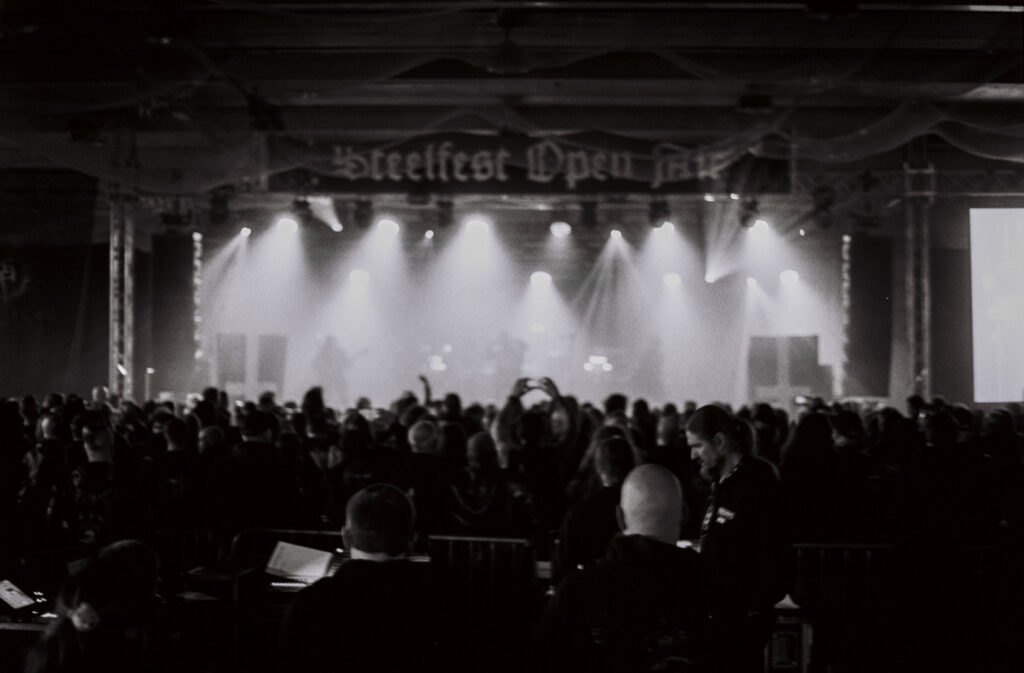
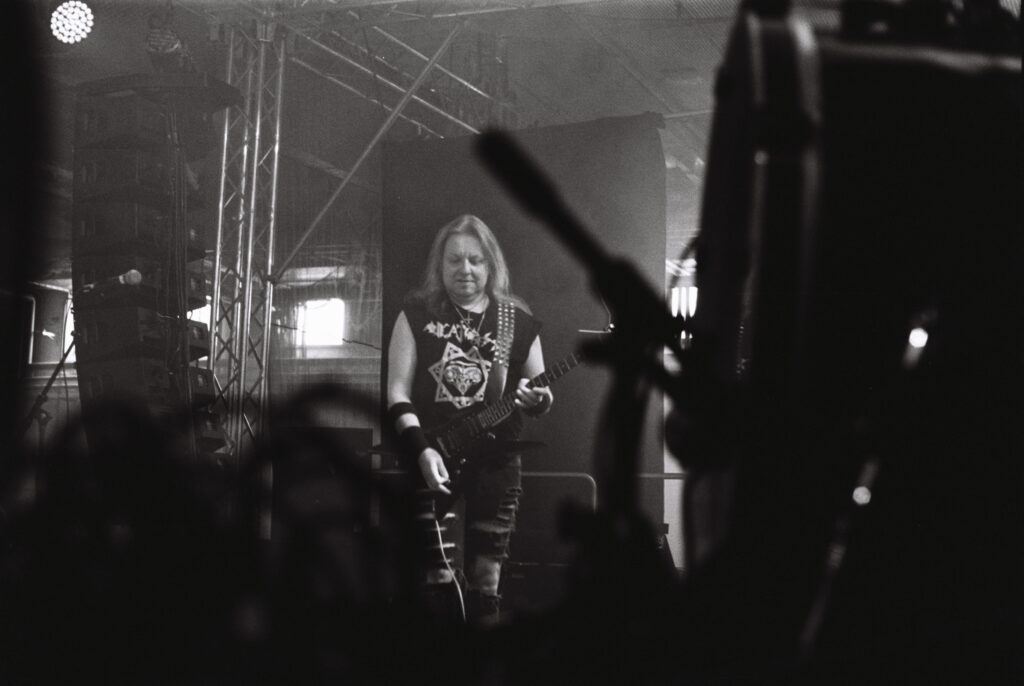
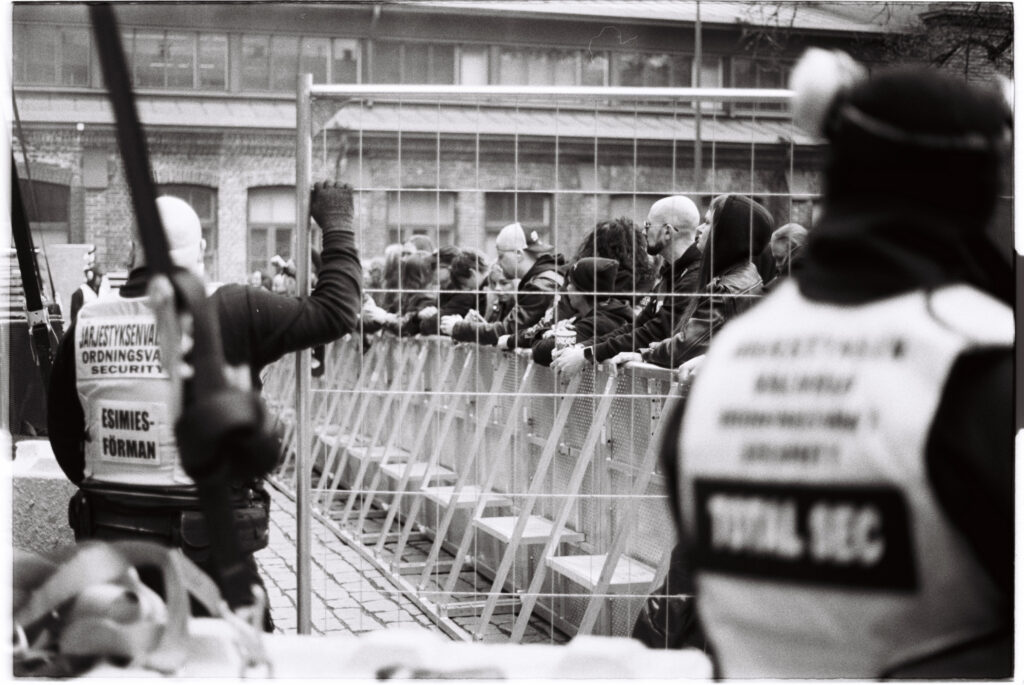
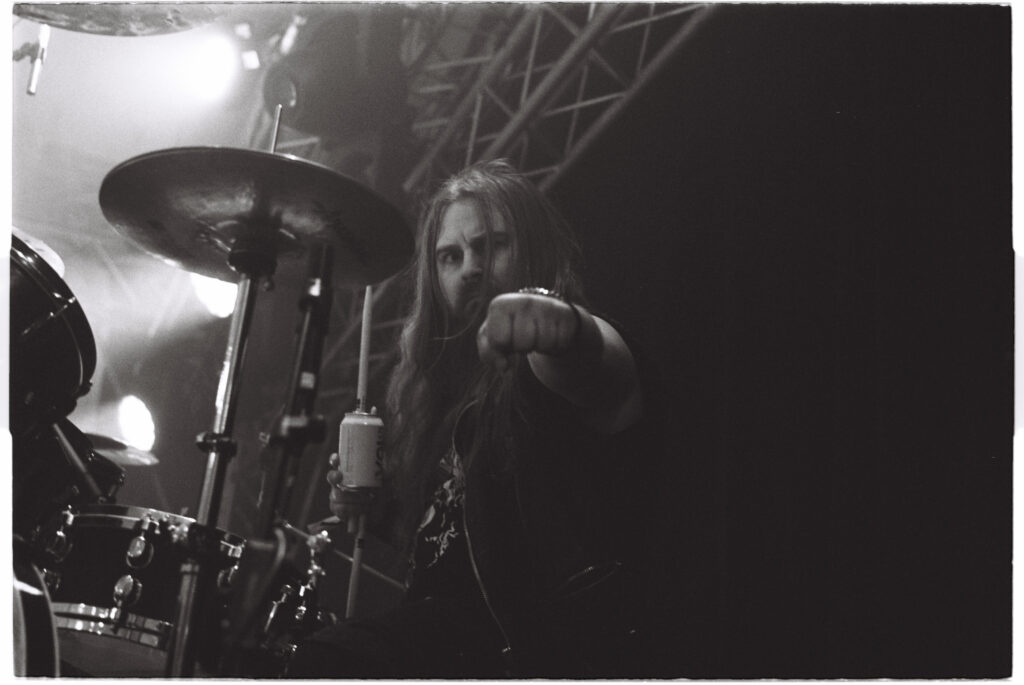
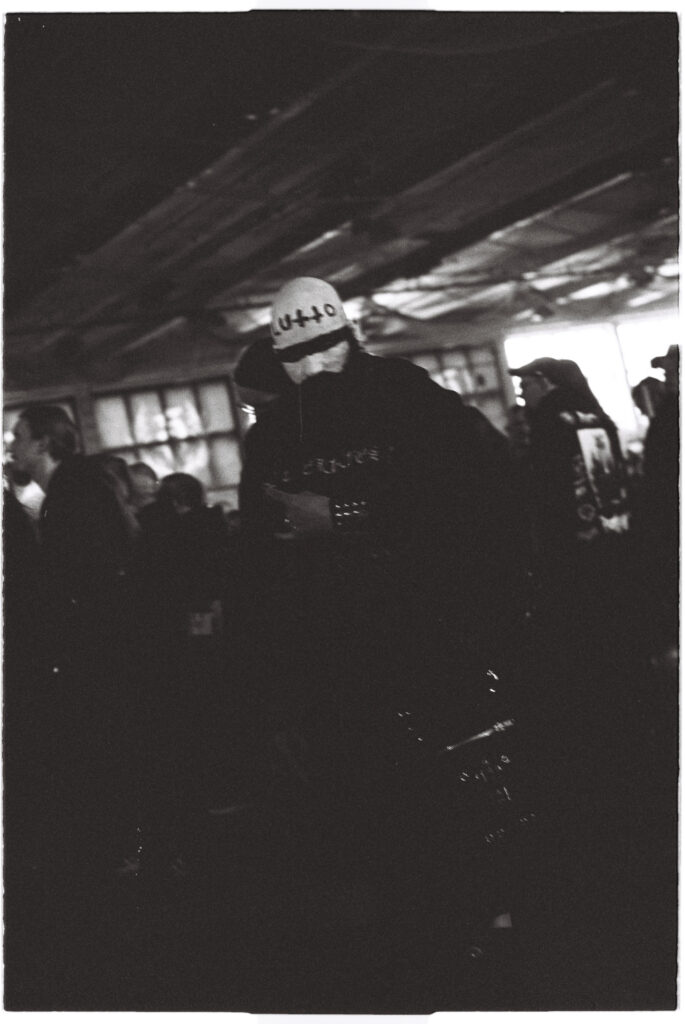
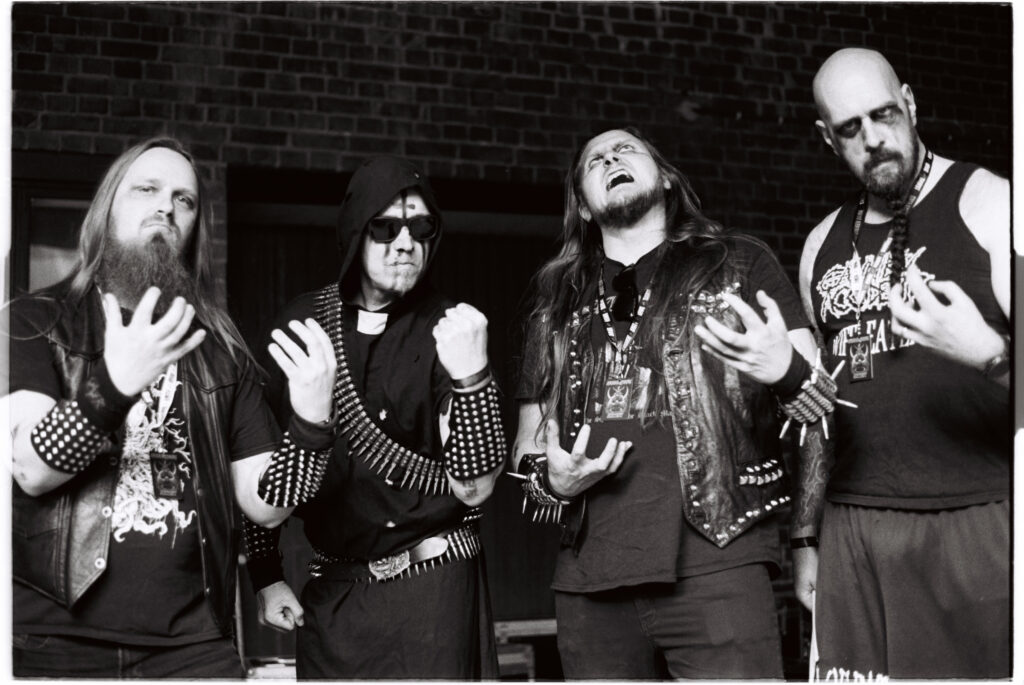
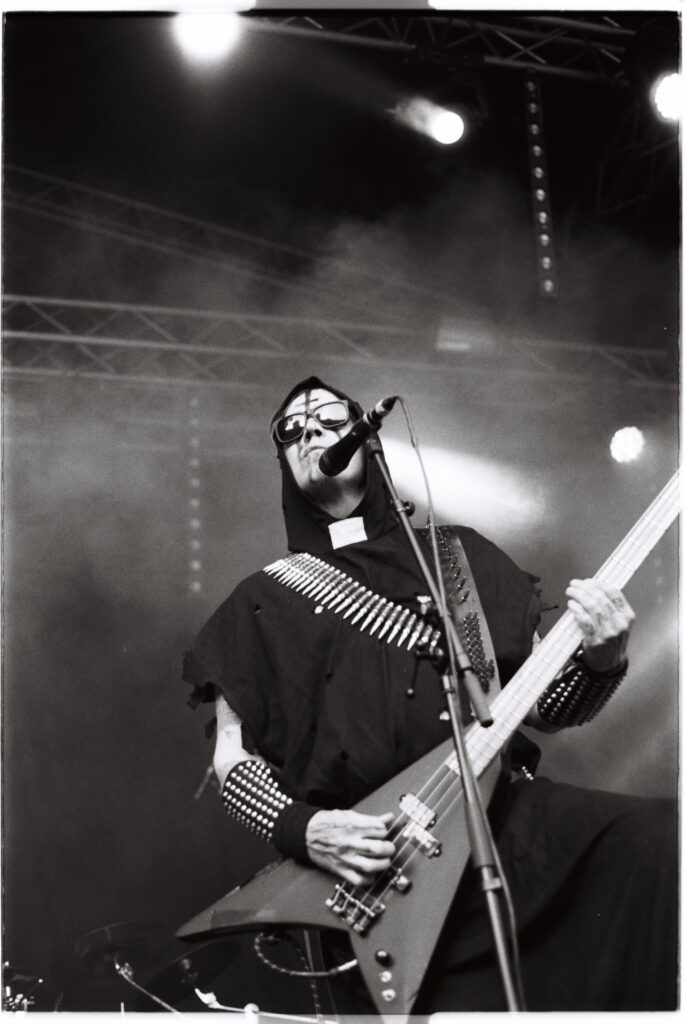
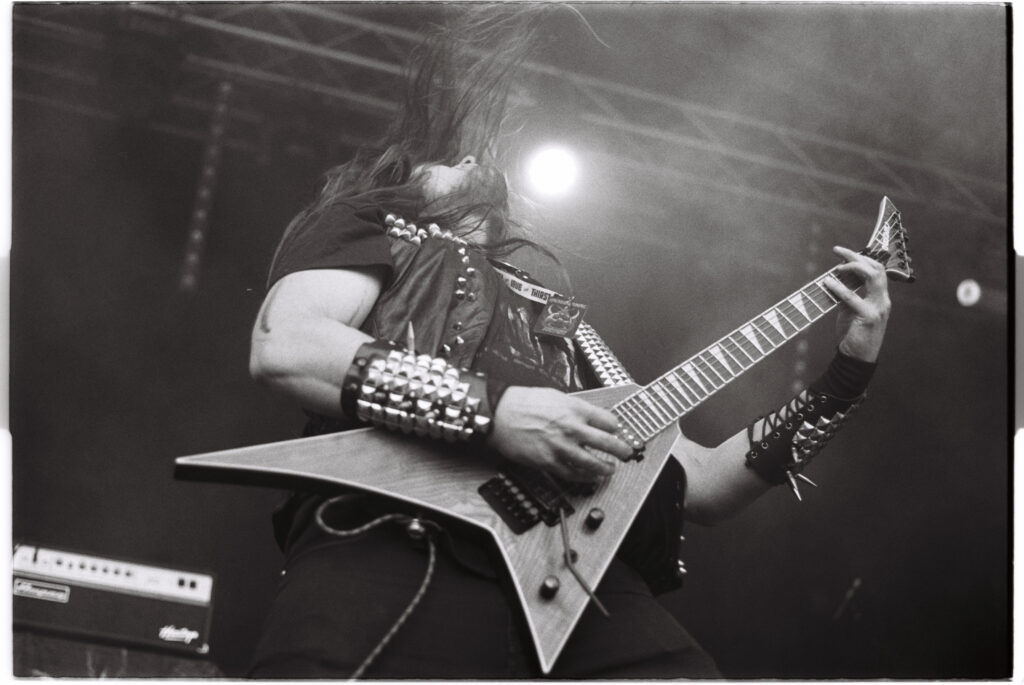
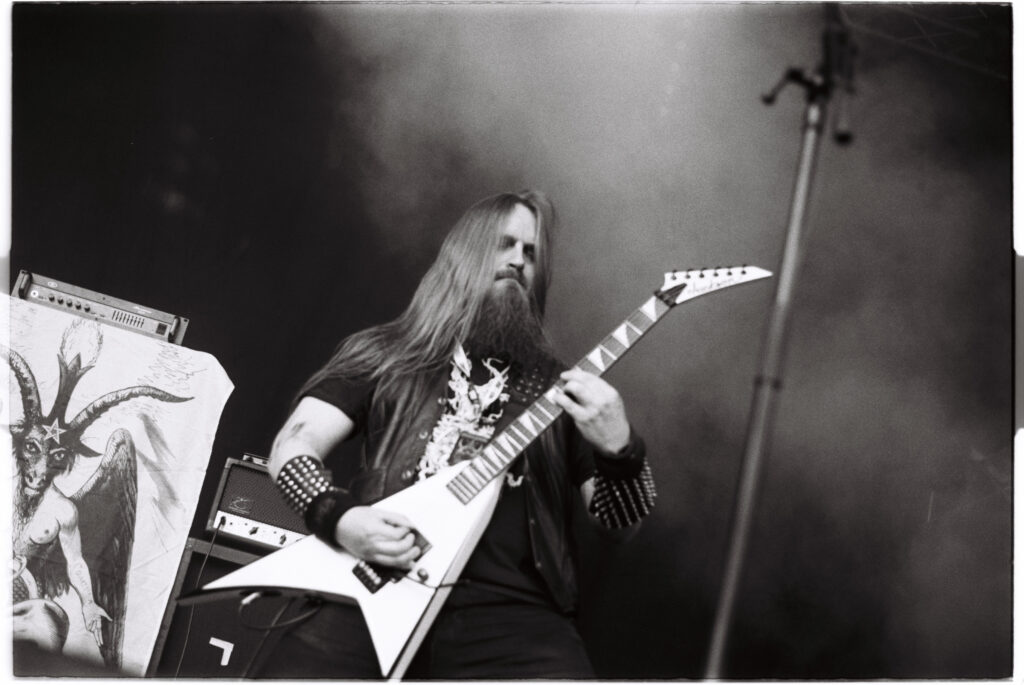
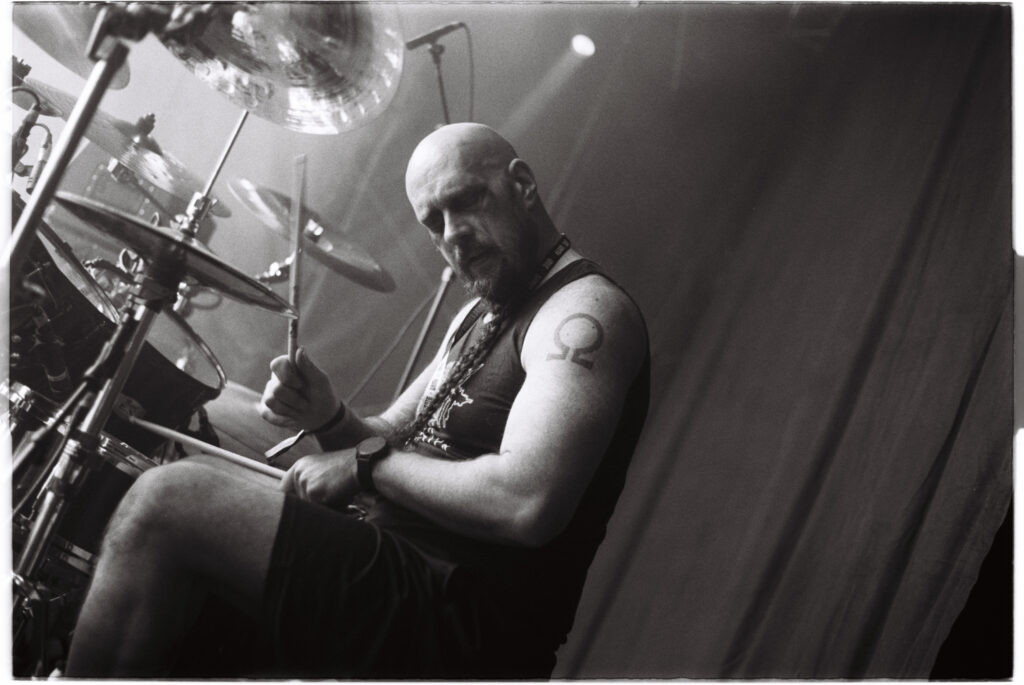
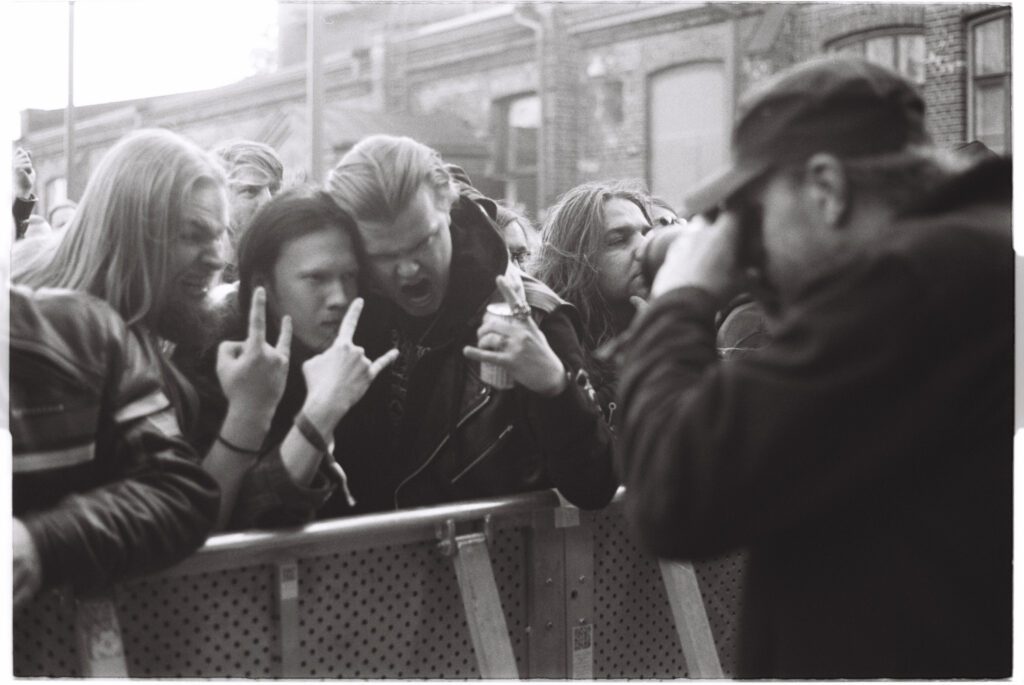
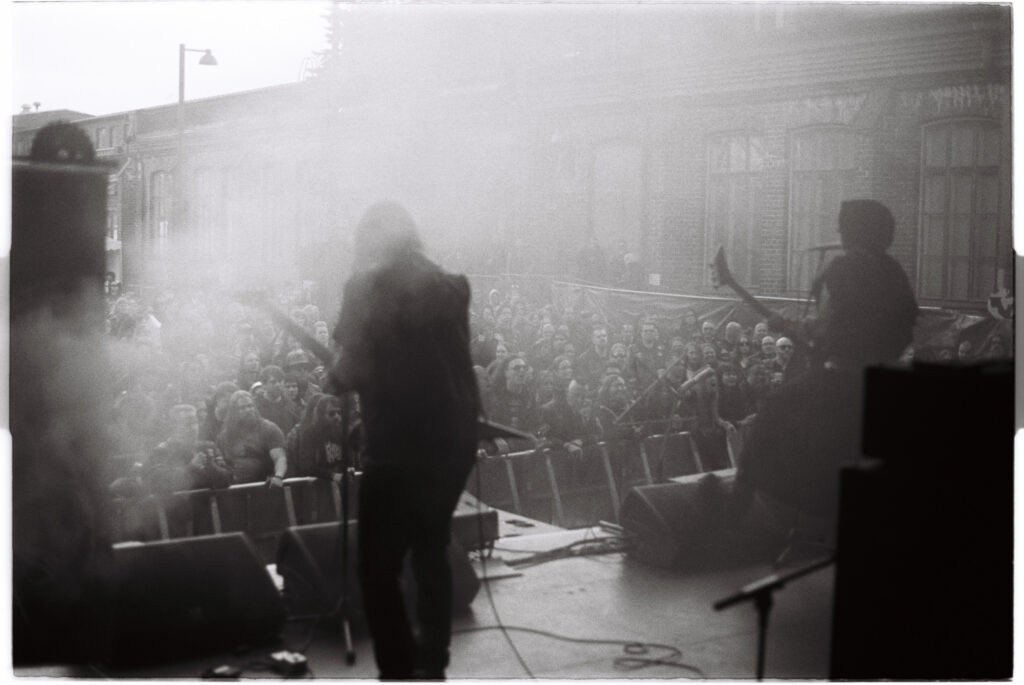
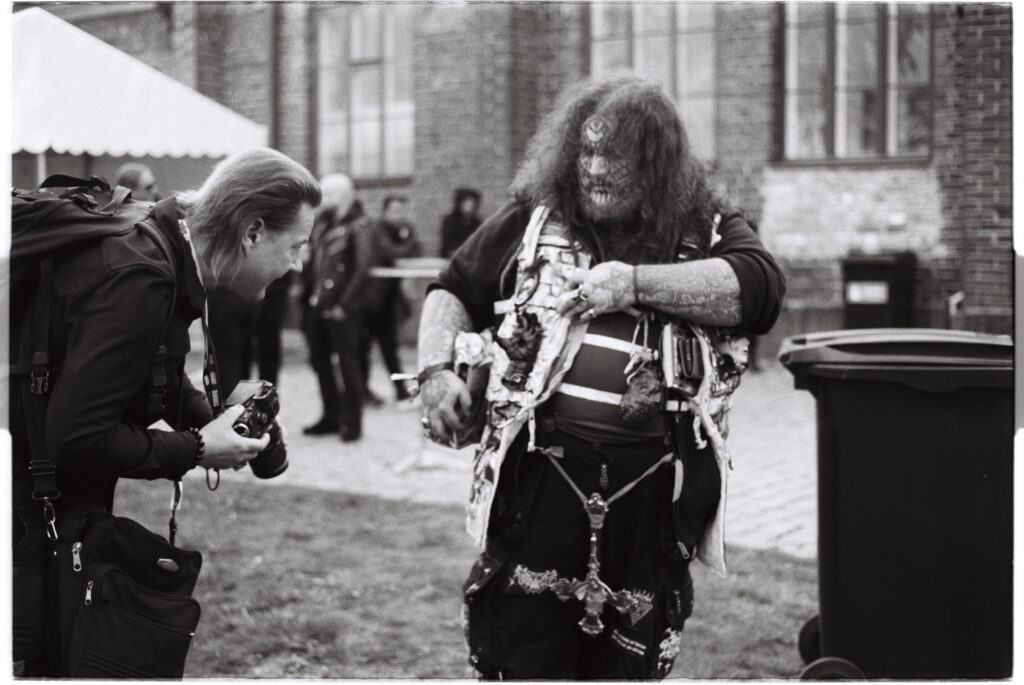
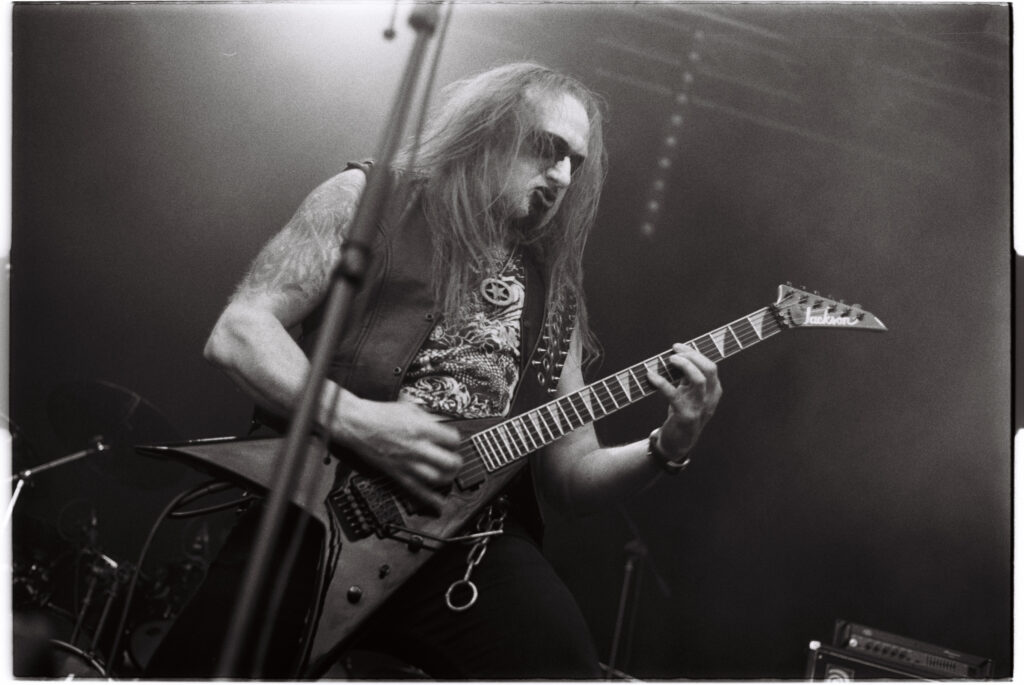
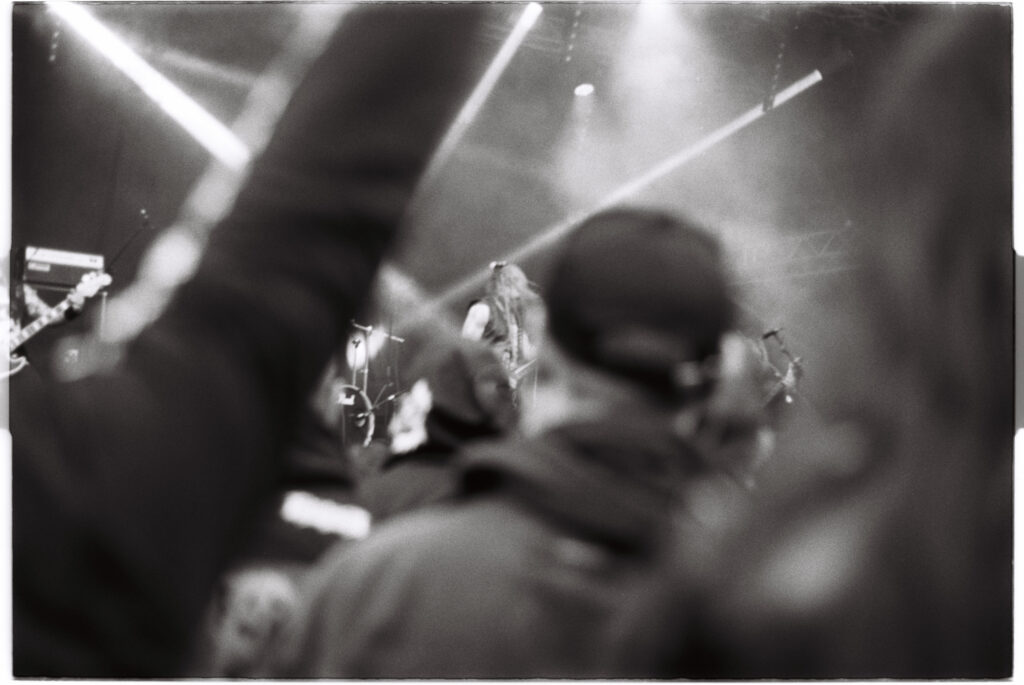
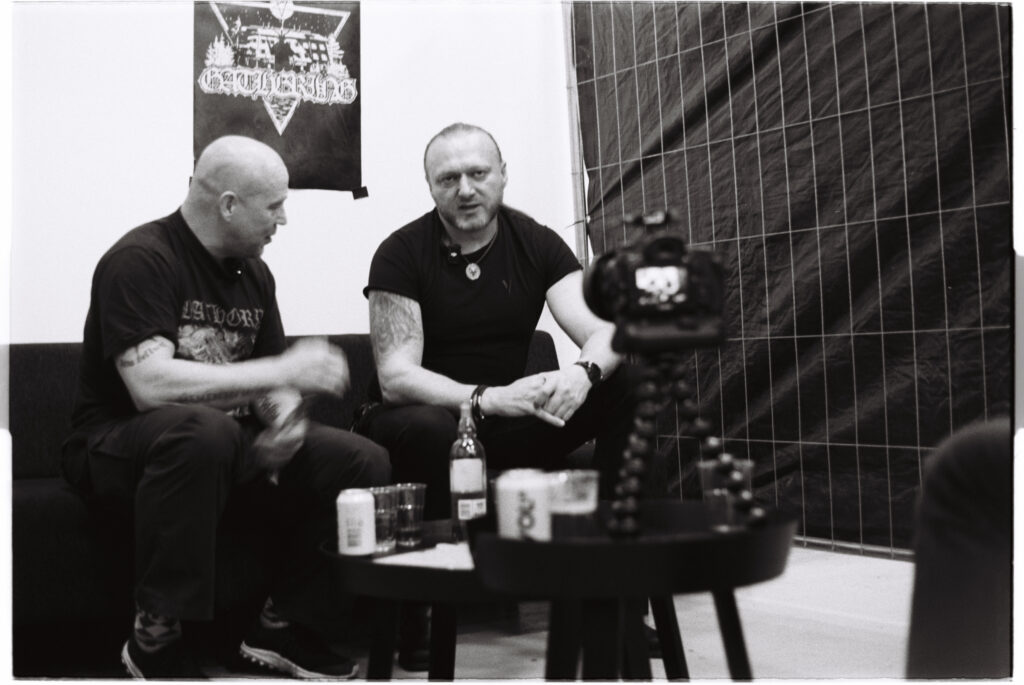
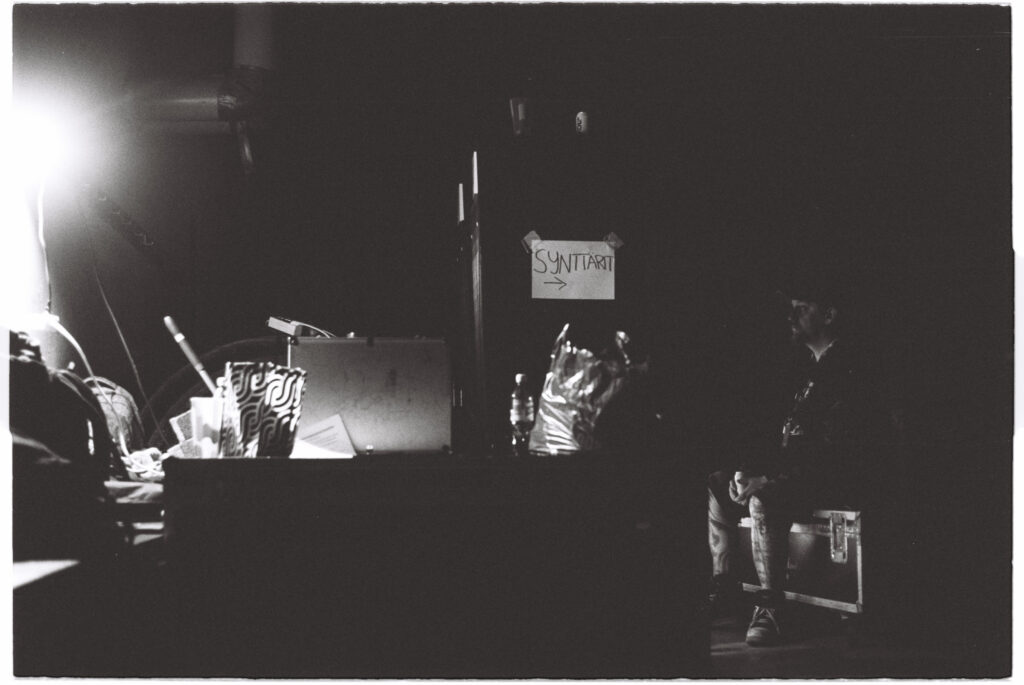
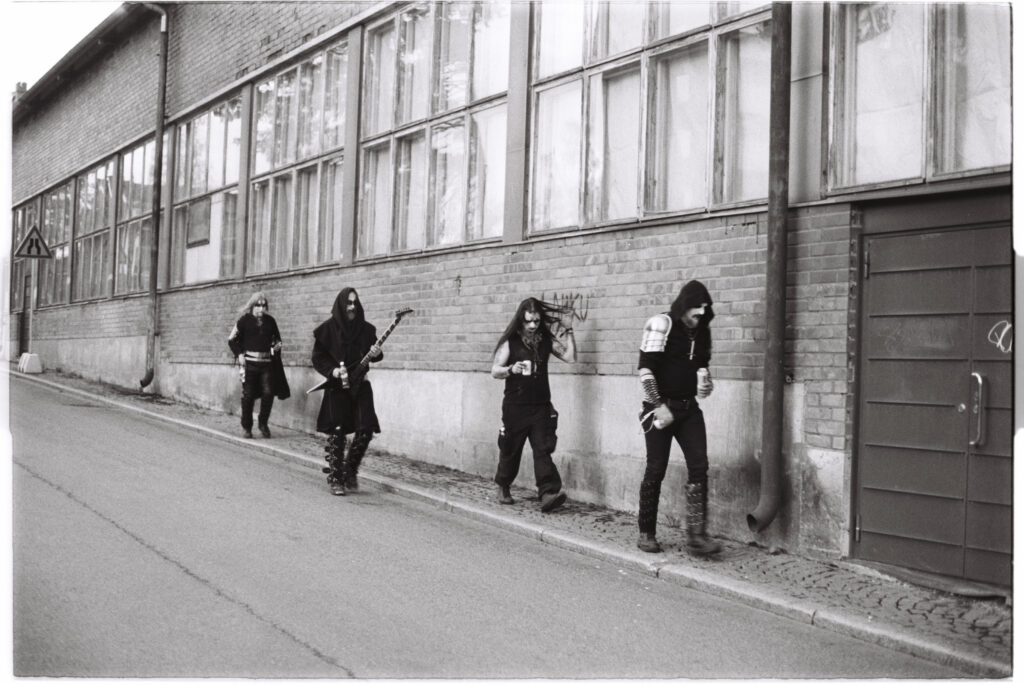
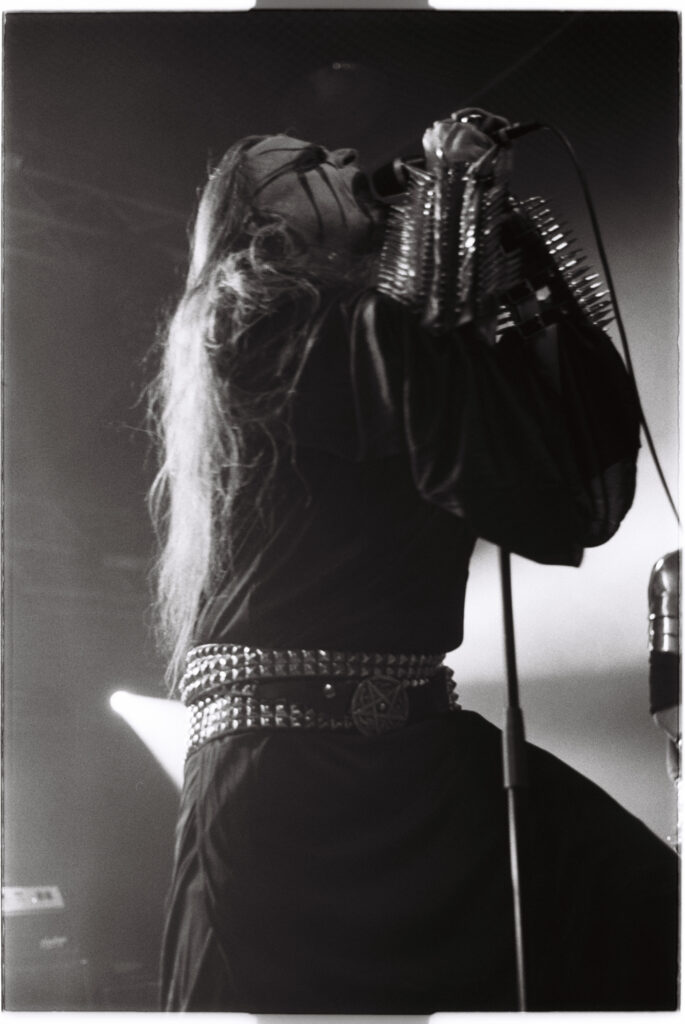
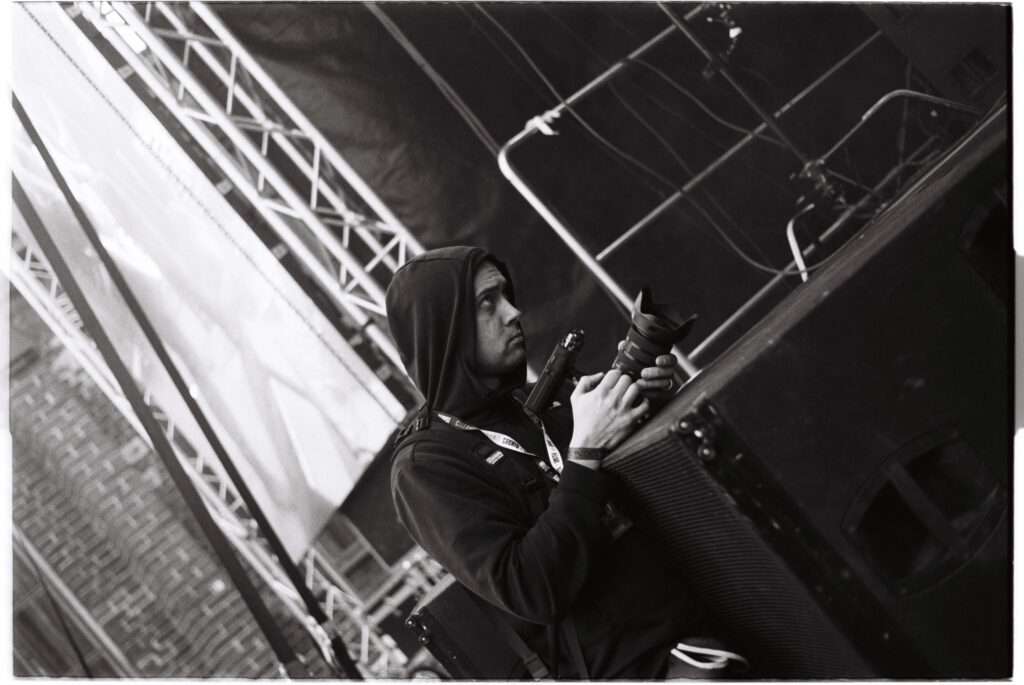
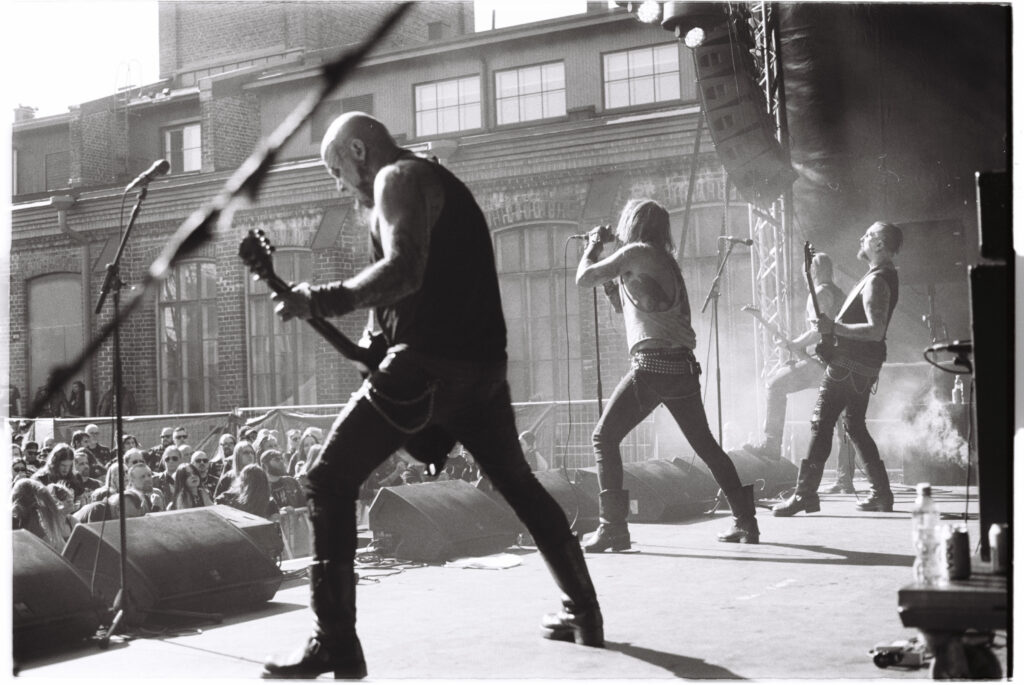
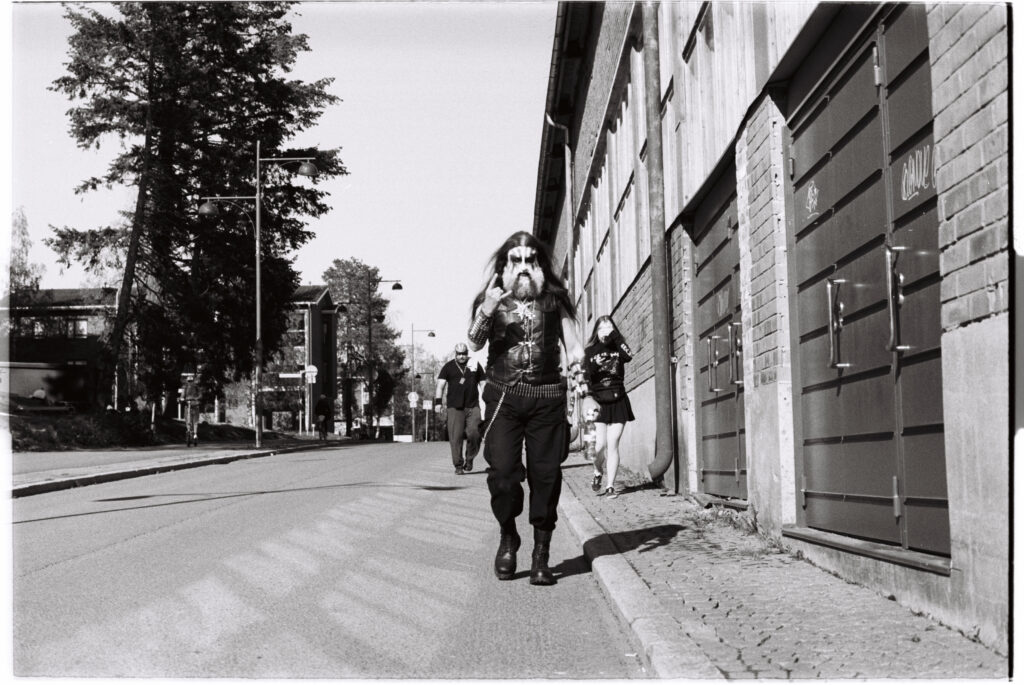
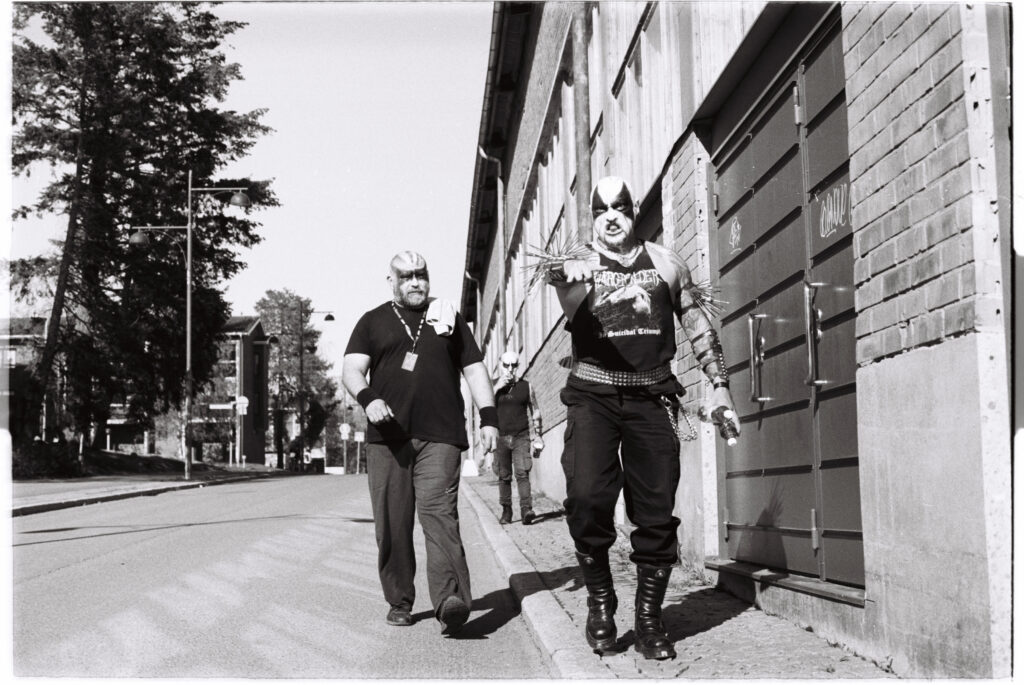
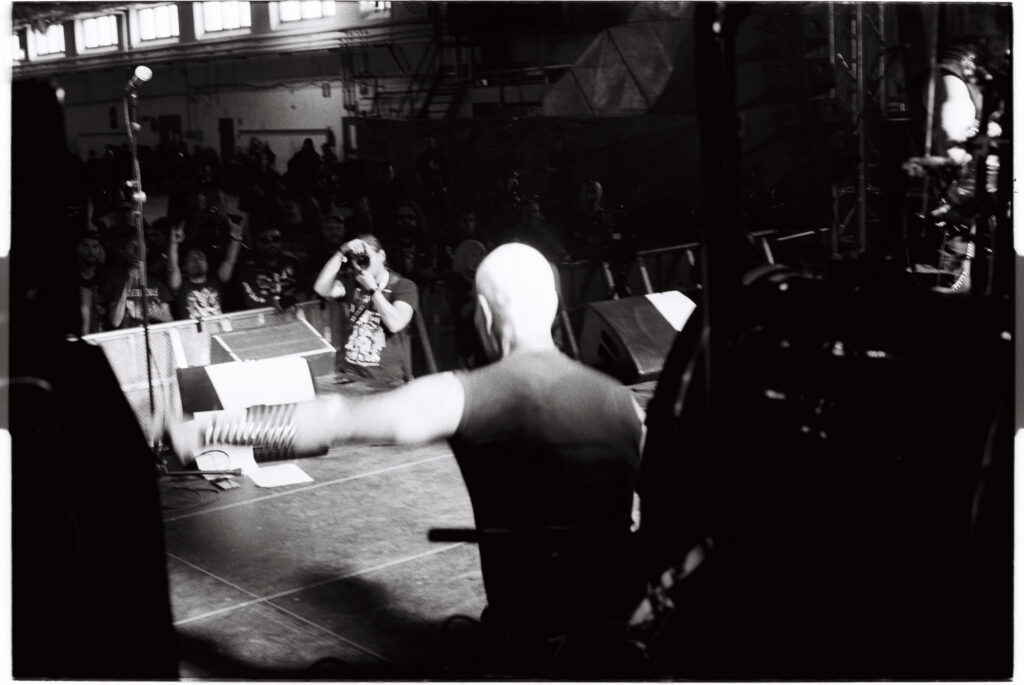
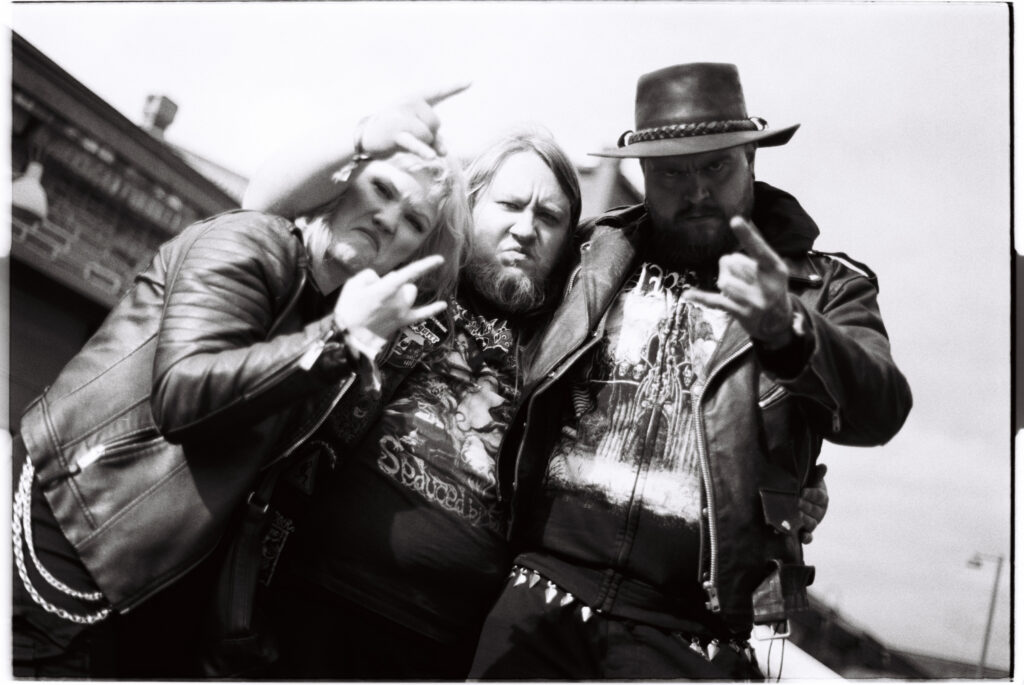
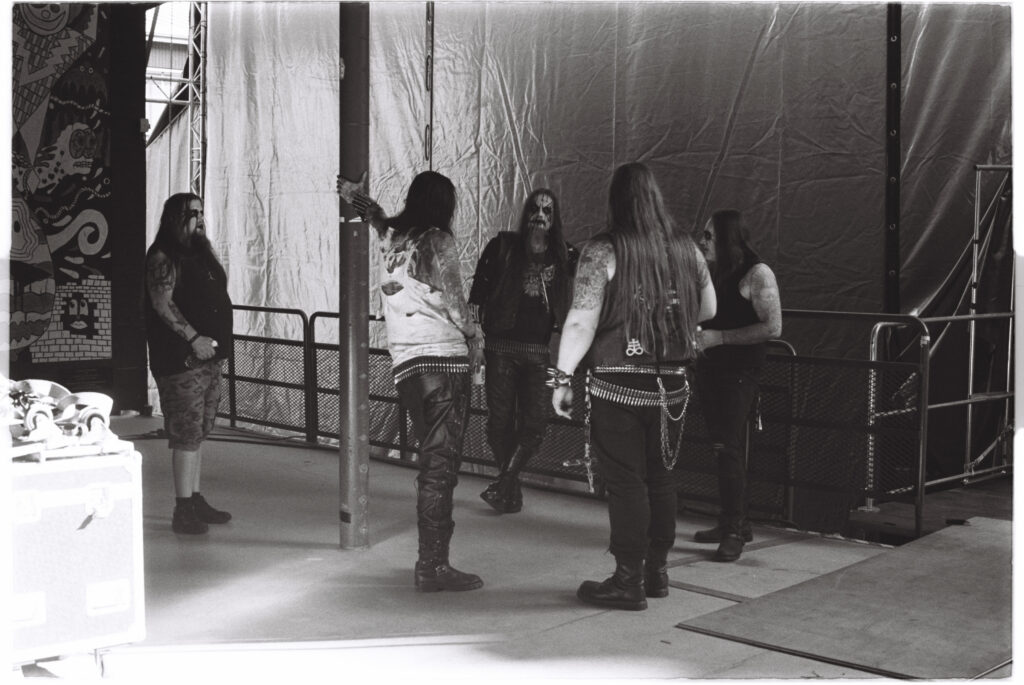
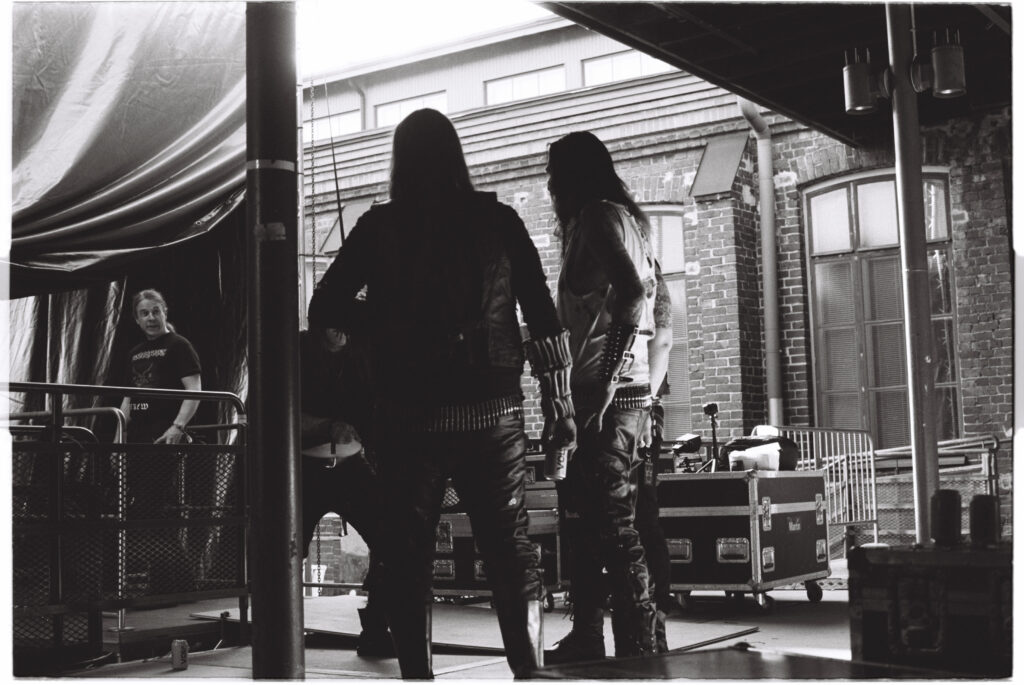
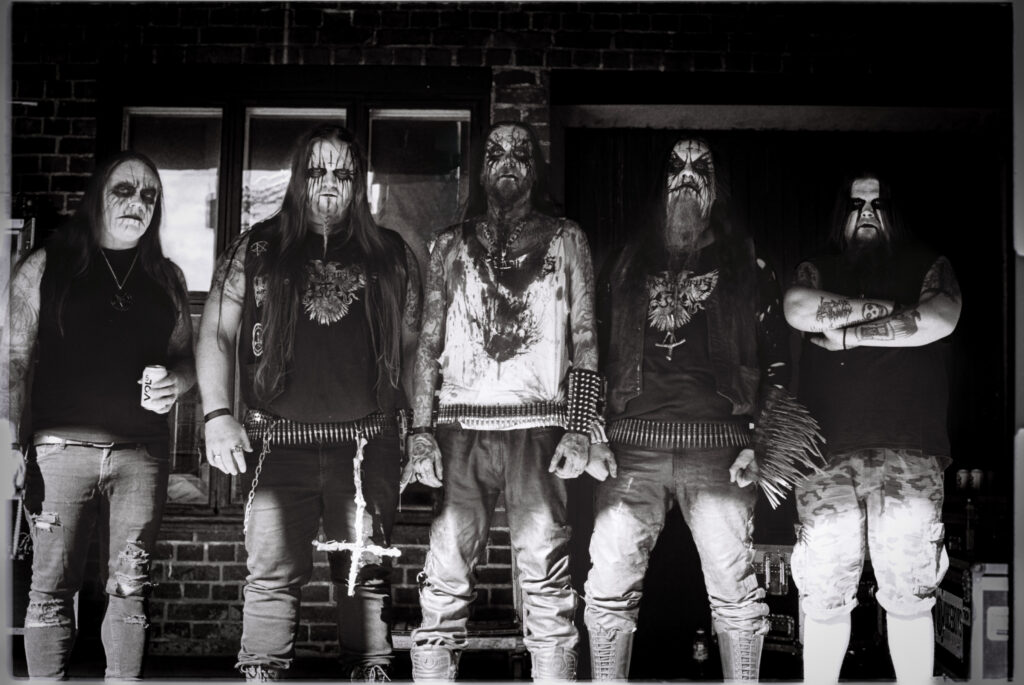
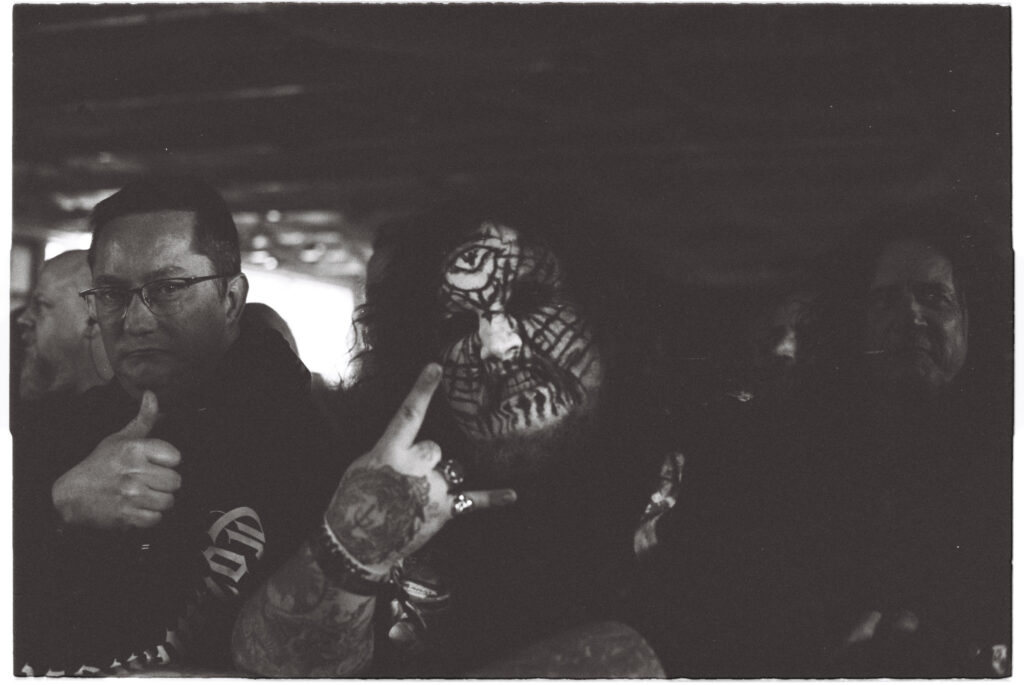
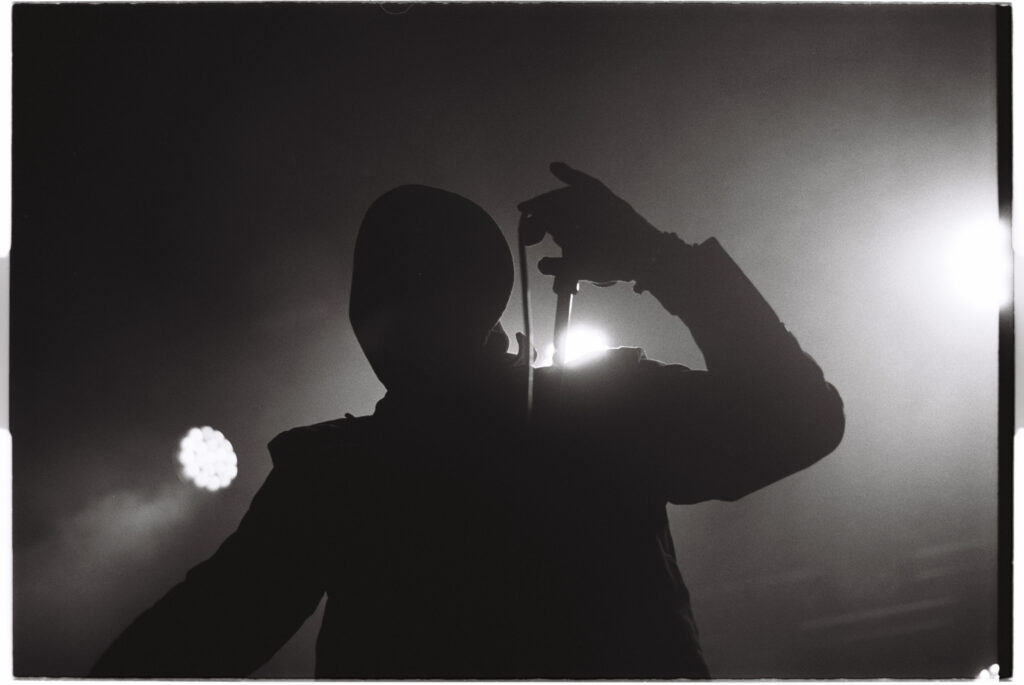
This is a collection of 35mm film photographs taken at Steelfest 2025. The camera I used was an Olympus OM2n from 1979 that I bought on the Norwegian buy-sell site Finn.no. It was in pristine cosmetic condition, and as Steelfest was my test site, it was also in perfect mechanical condition. It has proven to be in mint condition.
Olympus turned the world of cameras on its head when it introduced the OM series. Up until that time, SLRs were getting bigger and heavier. Olympus went in the opposite direction, shrinking the package down to a very compact size. The OM2n, released in 1979, was an improvement on the revolutionary OM1, which debuted in 1972. The OM1 was a manual, mechanical SLR. The OM2n added an aperture-priority autoexposure system driven by a revolutionary TTL/off-the-film-plane metering system. For all you camera enthusiasts out there, the auto aperture-priority auto-exposure feature, which is now standard on any camera, was first introduced in 1979 on the OM2n. Plainly speaking, on auto aperture mode the camera reads the available light and sets the correct aperture time to take to photo. This was first a mechanical feature until the the OM4-Ti was realesed in 87, being a fully electronic camera.
Since extreme metal revolves around peculiar aesthetic guidelines, I chose two film styles that I thought would both work. The first is Kodak 400 TX, a black-and-white film that produces crisp, high-contrast images with very little grain. Once digitalised with a good scanner, these images offer some room to be edited in Photoshop. Secondly, there is Ilford HP5 Plus 400, a very popular black-and-white film with low contrast and a high grain count. While the low contrast reduces the possibilities for working with the digitalised files, the high grain proves its value for black metal aesthetics.




0 Comments